خبر
A Plague Tale Resonance Ditches Stealth for Direct Combat—Here’s What Changes
A Plague Tale Resonance breaks the series' survival-stealth formula entirely, replacing protagonist Amicia's rock-throwing evasion with a new fighter named Sophia who meets enemies head-on with sword…
في هذا المقال
A Plague Tale Resonance breaks the series’ survival-stealth formula entirely, replacing protagonist Amicia’s rock-throwing evasion with a new fighter named Sophia who meets enemies head-on with sword and dagger. Set 15 years before Requiem on a mythological Greek island, the game represents Asobo Studio’s sharpest departure from its own design identity since the franchise began.
What Asobo Actually Built
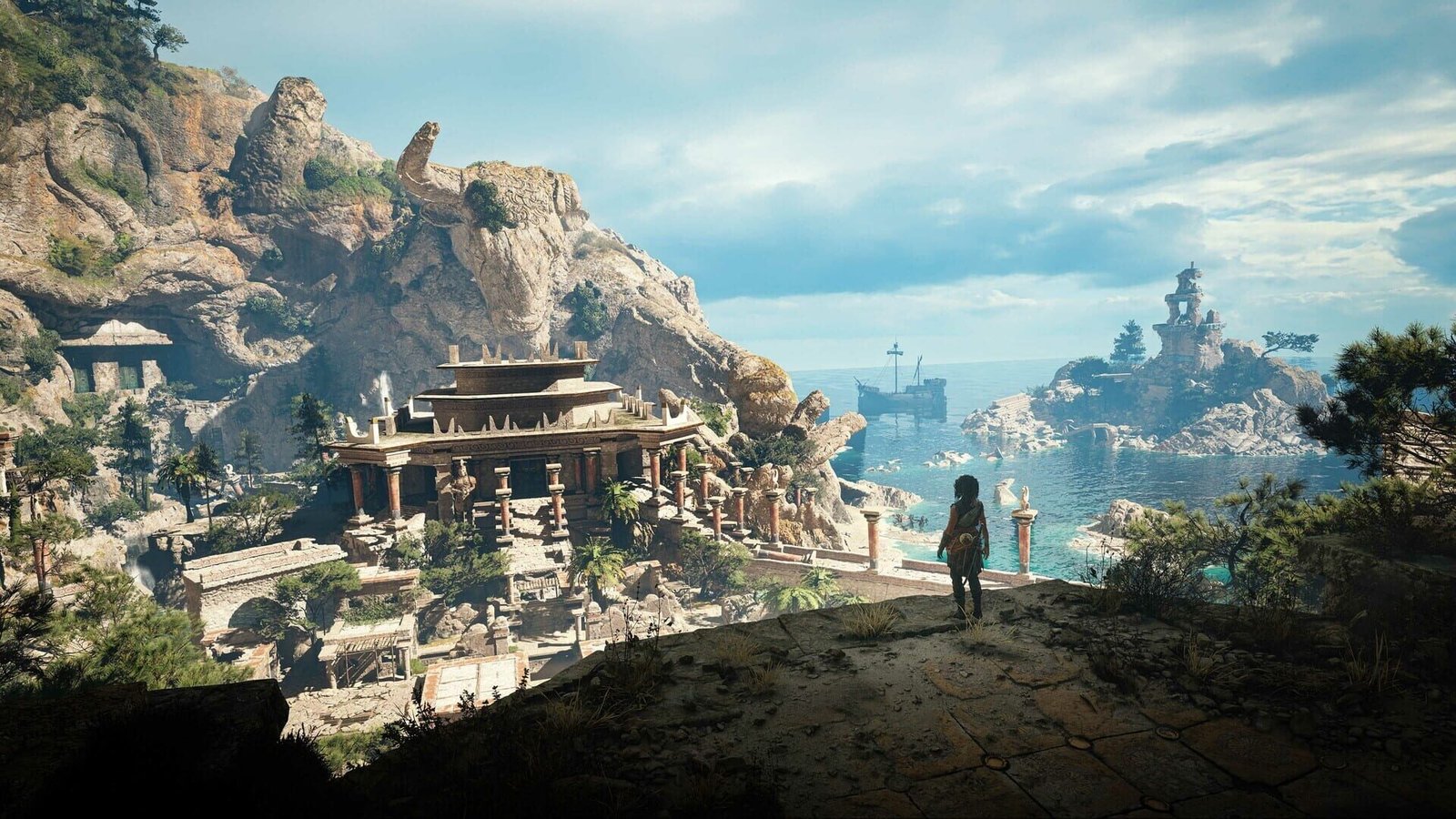
Sophia is a smuggler voiced by Anna Demetriou, searching for answers about her connection to the Prima Macula—the supernatural parasite driving the series’ core mystery. Her journey unfolds across Minotaur’s Island, rooted in Crete’s Minoan past, but the setting is more than backdrop: two parallel timelines run through the entire experience. One follows Sophia in 1334 through medieval ruins; the other plunges thousands of years into the Minoan era, where the same labyrinth exists in a completely different form. Actions and discoveries in the ancient past reshape what’s accessible in the medieval present—a structural choice preview outlets called Asobo’s most narratively ambitious since the series launched.
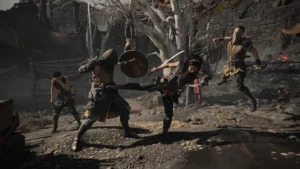
Combat draws from Ghost of Tsushima’s fluidity, Sekiro’s parry timing, and Sifu’s aggression-first design. The parry window is tight; mistimed blocks punish fast. Minoan-era enemies carry weapons the medieval ruleset doesn’t prepare you for, keeping combat distinct between timelines.
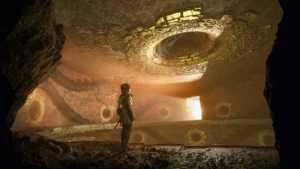
Puzzles remain central. Sophia carries a stolen Minoan artifact—a sphere that bends and redirects light through ancient chambers engineered for that purpose. Early puzzles handle simple redirections; later sequences stack multiple stages requiring timeline switching to solve. Preview outlets singled out puzzles as the game’s strongest element.
Asobo built Resonance on its proprietary Zouna engine and deliberately avoided generative AI during development, framing the choice as a creative principle. The studio expanded to around 80 developers over four years after Requiem’s release, adding combat specialists while core environmental and narrative teams continued their work.
Why This Matters for the Franchise
The A Plague Tale series earned its reputation through atmosphere and helplessness—Amicia’s inability to fight back made every encounter tense and every safe space meaningful. Resonance abandons that tension entirely. For players who found earlier entries’ pacing slow, the shift toward direct action and environmental puzzle-solving offers similar intellectual reward through different mechanics. But this isn’t a soft remix; preview language consistently described the tone as “mythological adventure” rather than “plague survivor,” signaling that the series’ emotional tenderness—a defining characteristic of Innocence and Requiem—may not carry over in the same form.
The dual-timeline structure also signals ambition. It’s not just a narrative flourish; it’s a systems-level choice that affects both exploration and puzzle design, suggesting Asobo sees this entry as capable of standing on its own design philosophy rather than iterating within the established mold.
What’s Next
Resonance: A Plague Tale Legacy arrives on PlayStation 5, Xbox Series X/S, and PC via Steam and Epic Games Store at $59.99 (console) and $49.99 (PC). It hits Xbox Game Pass Ultimate and PC Game Pass day one at no extra cost. Players expecting another survival-horror stealth experience should reset their expectations before launch; everyone else should watch early reviews closely to see whether the mythological pivot sustains its promise.