News
Stranger Than Heaven’s Grappling Combat Impresses, but scope across Japan feels rushed
Stranger Than Heaven's two-sided grappling combat impressed at Gamescom 2026, but the demo rushed its eras. RGG's game launches January 15, 2027.
In this article
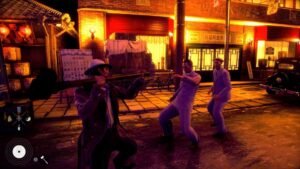
Ryu Ga Gotoku Studio’s Stranger Than Heaven made a strong first impression at Gamescom 2026 with an unusual grappling-focused combat system, but the hands-on demo rushed through its historical settings so quickly that it was hard to judge how much depth each era will get. The game launches on January 15, 2027 for PlayStation 5, Xbox Series X|S and PC.
What Stranger Than Heaven is
Developed by RGG Studio and published by SEGA, Stranger Than Heaven follows Makoto Daito, a Japanese-American orphan who stows away on a ship from San Francisco to Japan hoping to start a new life. The story moves across five Japanese cities in five different decades: Kokura in 1915, Kure in 1929, Minami in Osaka in 1943, Atami in 1951 and Shinjuku in Tokyo in 1965.
It is framed as a distant prequel to the Like a Dragon series, depicting the origins of the Tojo Clan, the yakuza organisation Daito eventually founds. RGG has said, however, that it is not meant to tell the past of that series directly, and no knowledge of earlier games is needed.
How the combat works
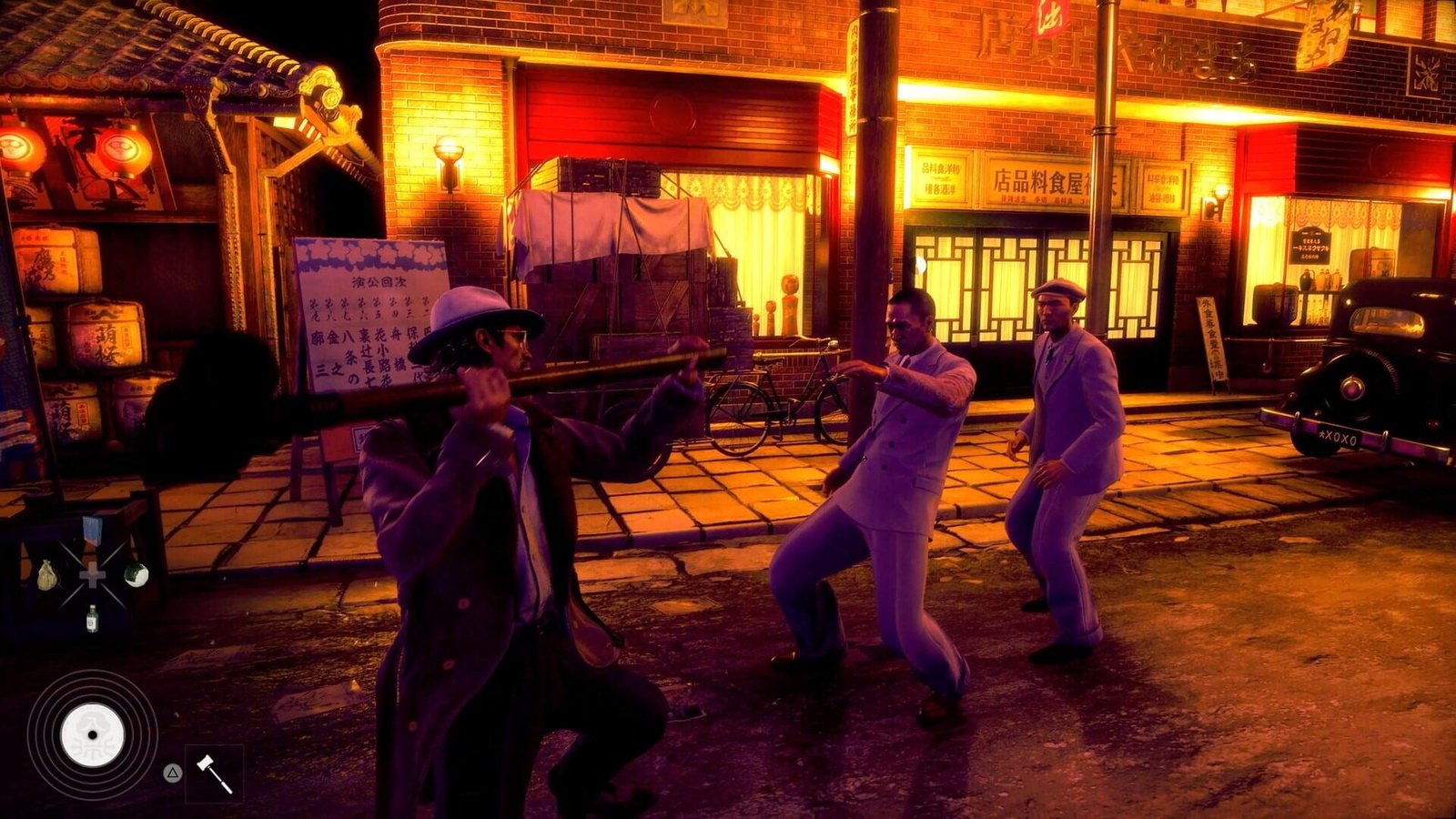
The combat is the standout. Daito’s left and right sides can be controlled independently, with buttons on each side of the controller mapped to punches, kicks or blocks for the matching limb. Grabs and throws play a much larger role than in a typical brawler, and the system rewards learning timing and positioning rather than mashing combos. Upgradeable weapons add another layer.
When it clicked in the demo, it felt deliberate and rewarding, and clearly different from the strike-heavy fighting that most action games rely on.
Where the demo fell short
The Gamescom build took players through three of the game’s eras in quick succession. That worked as a showcase for the combat, but each period got very little space. It was hard to tell how the game will balance historical atmosphere against arcade-style action, or how much story weight each decade carries.
How it compares to the Yakuza games
RGG’s Yakuza and Like a Dragon games are known for dense, detailed districts that players come to know street by street over dozens of hours. Stranger Than Heaven trades that single-city depth for breadth across five locations and half a century. The studio’s track record with setting work gives reason for optimism, but the structure is a clear change, and the demo did not yet prove each city can feel as lived-in as Kamurocho.
Why it matters
For fans of RGG, this is the studio’s most ambitious experiment in years: a new protagonist, a new combat philosophy and a story that spans eras rather than one neighbourhood. The combat alone makes it worth watching for anyone who wants action games to ask more of them than button mashing.
The open question is scope. With the January 2027 release approaching, the most useful thing SEGA and RGG can show next is a longer look at a single city, to prove the full game gives each era proper attention.