News
House House’s Big Walk Breaks the Friendslop Mold With Meaningful Exploration and Communication
House House's cooperative game Big Walk, announced in 2023 and now available to play, challenges the dismissive "friendslop" label often attached to low-budget indie co-op games by delivering a…
In this article
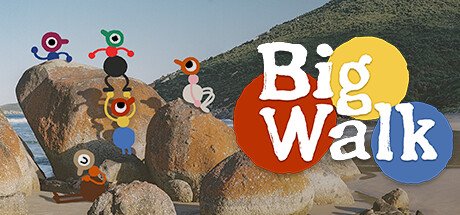
House House’s cooperative game Big Walk, announced in 2023 and now available to play, challenges the dismissive “friendslop” label often attached to low-budget indie co-op games by delivering a thoughtfully designed experience built around exploration, discovery, and shared moments with friends.
What Makes Big Walk Different
Unlike many cooperative indie games that emphasize failure states and competitive pressure, Big Walk takes a hands-off approach where players cannot fail. The game prioritizes exploration, problem-solving, and discovery over traditional win-or-lose mechanics, asking players and their friends to simply embark on a “big walk” together without stakes or defined objectives.
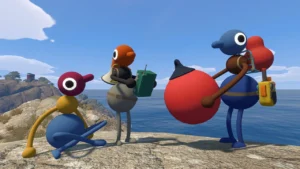
The game uses layered communication systems to create memorable moments between players. Flares can be shot into the sky to locate separated friends, proximity chat requires physical gestures and pointing when players can’t hear each other, and walkie-talkies with their own protocol—ending sentences with “over”—provide another discovery-driven communication tool. Each new communication method unlocks fresh puzzle-solving opportunities and ways to explore the game’s open world.
Building Emotional Landscapes
Big Walk distinguishes itself through intentional environmental design that transforms digital spaces into what the reviewer calls “emotional landscapes.” Players discover beaches with music where they can jam with friends, watchtowers offering perspectives over areas explored in the previous hour, and hidden spectacles like maps, tramways, and other attractions scattered across the island. The game encourages constant discovery by having players spot distant features and collectively decide to explore them.
These environmental moments and shared discoveries create lasting memories that reveal meticulous design rather than the thoughtless creation implied by the term “slop.” The longer players engage with Big Walk, the more emotionally attached they become to the places they’ve traveled and the world itself, which functions as what the reviewer describes as “the world’s largest playground.”
Why It Matters
“Friendslop” has become common shorthand in gaming discourse to describe cooperative indie games perceived as low-quality, disposable experiences—games often characterized by low budgets, short playtimes, and minimal polish compared to AAA releases. Games like R.E.P.O., PEAK, and Among Us have received this label despite their popularity. Big Walk’s design philosophy, however, suggests that cooperative indie games need not follow this trajectory, demonstrating that meaningful player experience doesn’t require failure states or competitive pressure.
The emphasis on exploration and communication-based puzzle-solving reflects a design philosophy that values the social bonds formed during play over traditional gameplay metrics. This approach transforms how players think about cooperative gaming—not as a series of challenges to overcome together, but as a framework for creating shared cultural and emotional moments.
What’s Next
Players looking for cooperative experiences with depth beyond typical indie offerings should find Big Walk worth their time. The reviewer does note concerns about replayability once all content is discovered, though the first playthrough delivers a memorable experience far removed from low-effort game design.