





Rockstar’s latest GTA VI showcase finally shifts the conversation from how Leonida looks to how it actually plays. Across roughly 27 minutes of PS5 footage, the studio showed Jason and Lucia working as a pair, seamless transitions between dialogue and combat, contextual interactions, dense interiors and a Vice City built to feel like a living cultural machine.
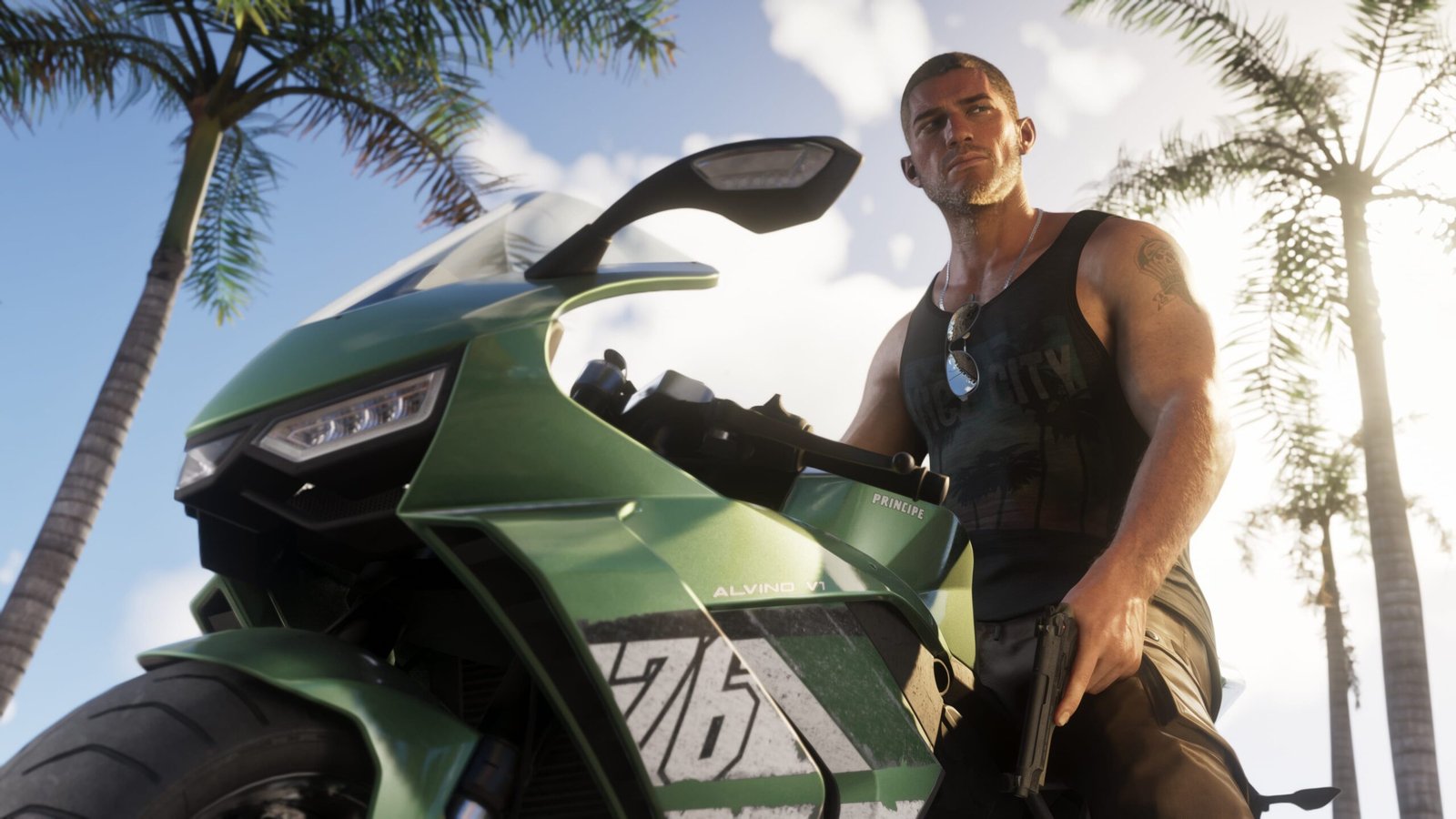
Rockstar officially calls the presentation Grand Theft Auto VI: An Extended Look, but for players this is effectively the third major GTA VI reveal. The presentation is built from in-game footage captured on PlayStation 5, with GTA VI still scheduled for November 19, 2026 on PS5 and Xbox Series X|S.
Trailer 1 sold us the city. Trailer 2 sold us Jason and Lucia. This showcase sells something more important: the connective tissue between everything Rockstar has built.
Jason and Lucia are becoming a gameplay system
The most meaningful reveal was not a new vehicle or another robbery. It was how naturally Jason and Lucia appear to function inside the same playable situation.
One sequence follows the pair into an apartment building to complete a pickup for Boobie Ike. A tense meeting becomes a police raid, and the presentation transitions into direct control while Lucia moves alongside Jason and covers him during the escape. Elsewhere, the pair rob gas stations together, coordinate while driving, and encounter jobs that appear capable of involving one protagonist rather than both.
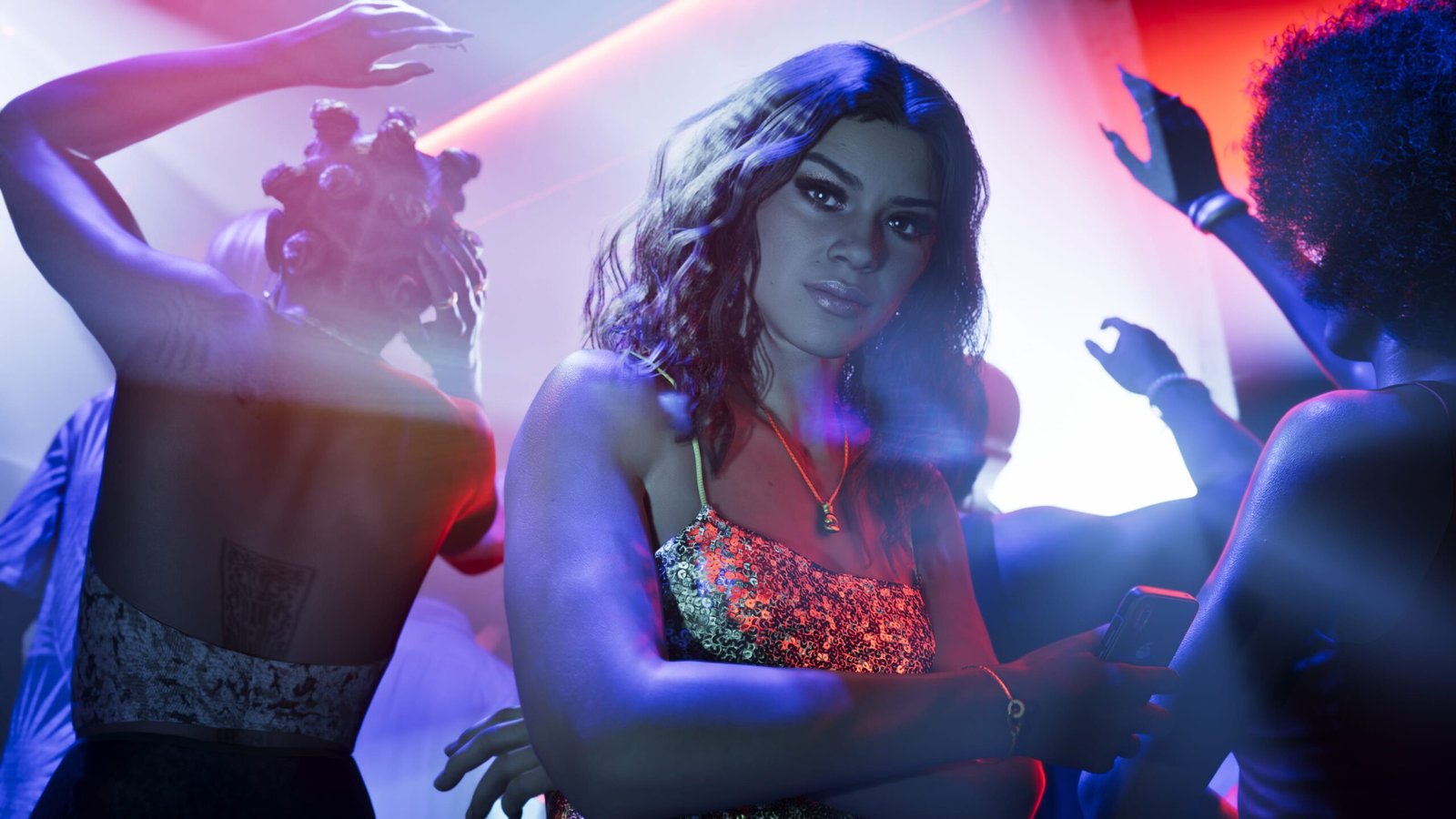
That does not confirm branching missions, co-op play, or complete freedom to choose either protagonist for every assignment. It does suggest that who drives, who fights, who follows and who takes a particular job may become part of mission design rather than simply part of the story.
Rockstar has also described situations where Jason can drive while the player switches to Lucia in the passenger seat to use the in-game phone, before moving between driving and firing at pursuers during a chase. Character switching therefore looks increasingly like more than a navigation tool. The relationship itself may be one of GTA VI’s central gameplay systems.
The world responds to context, not just button presses
Some of the most revealing moments are deliberately mundane. Jason appears to break into a vehicle through a contextual interaction. Lucia can handle a weapon while her other hand is occupied. Convertible roofs move, characters interact with everyday objects, and conversations continue while the player performs smaller actions.
None of those details is revolutionary alone. Together they point toward Rockstar’s larger ambition: reducing the number of moments where a character performs the same generic animation regardless of what is happening around them.
The leap may not be one unprecedented mechanic. It may be hundreds of familiar GTA actions gaining more physical, narrative and situational awareness.
The combat looks familiar — and that may be intentional
The shooting remains recognisably Grand Theft Auto: third-person, over-the-shoulder gunplay built around movement and cover. Rockstar has not suddenly turned GTA into an entirely different shooter.
The bigger improvement appears around the combat. Conversations become confrontations, confrontations become shootouts, and shootouts become escapes without the experience visibly breaking into separate modes. Lucia can move alongside Jason rather than disappearing when direct control begins.
GTA VI’s combat may therefore be evolutionary rather than revolutionary. Its real advancement could be how naturally violence emerges from the world and how smoothly the game returns to exploration afterward.
Leonida is not merely a map — it is a cultural machine

The showcase moves through apartments, gang-controlled buildings, nightlife, gas stations, crowded streets and the strange corners of Leonida that have always powered GTA’s satire. Television, advertising, fictional brands and social feeds appear woven into the environment rather than sitting outside it.
Vice City is therefore not simply a city the player observes. It is a city that is constantly observing and broadcasting itself through phones, advertisements, celebrities, tourists and viral content.
That may become GTA VI’s sharpest idea: the player does not merely inhabit an open world. The player inhabits a social algorithm capable of turning every accident and eccentric stranger into entertainment.
What the showcase still does not prove
A heavily edited presentation cannot demonstrate how every system behaves during completely unscripted free roam. We still need to see whether companion behaviour remains convincing when the player abandons the intended route, how flexible missions really are, how the police system reacts, how many interiors remain accessible and how performance holds up in Leonida’s busiest areas.
This is the real challenge facing Rockstar. Creating one seamless transition inside a carefully authored mission is achievable. Maintaining the same illusion after a player steals an unrelated vehicle, drives in the opposite direction and creates a pursuit the designers never intended is considerably harder.
Why this reveal matters
Previous GTA VI marketing proved that Rockstar could build an extraordinary-looking Florida-inspired world. This presentation finally begins answering the harder question: what makes GTA VI meaningfully different to play?
The answer appears to be integration. Jason and Lucia, combat, dialogue, interiors, social media and open-world simulation are being designed to overlap instead of waiting for their individual turn.
The Ralify verdict
This is GTA VI’s strongest presentation yet, not because it shows the largest explosion or reveals every corner of the map, but because it starts explaining how the game is supposed to feel from one moment to the next.
Rockstar does not appear to be building merely a larger GTA V. The objective is to combine GTA’s speed and chaos with a more reactive simulation, then place Jason and Lucia’s relationship at the centre of it.
The next open-world leap may not come from adding more icons to the map. It may come from removing the seams between narrative, gameplay and world simulation.
The biggest question now is not whether the hardware can render what Rockstar has shown. It is whether Leonida will remain this convincing when the player stops following the script.