News
Control Resonant Review: A Demanding Evolution for Remedy
Remedy Entertainment’s latest release, Control Resonant, marks a significant departure for the studio, shifting from its established design roots toward a fast-paced, semi-open world action RPG.
In this article
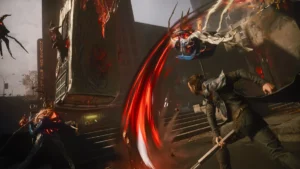
Remedy Entertainment’s latest release, Control Resonant, marks a significant departure for the studio, shifting from its established design roots toward a fast-paced, semi-open world action RPG. Launched on September 24, 2026, for PS5, Xbox Series X/S, and PC, the game pivots away from the third-person shooter mechanics of its predecessor to embrace a twitchy, melee-focused combat style compared to the likes of Devil May Cry.
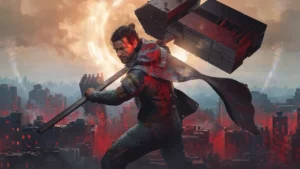
Set seven years after the events of Control, players step into the role of Dylan Faden as he attempts to escape the Oldest House while navigating a New York City besieged by the Hiss. The game is distinguished by its intense, rhythmic combat, which emphasizes spacing, timing, and aggression. Notably, director Mikael Kasurinen and the development team opted to exclude traditional parry mechanics, focusing instead on situational awareness and rapid decision-making.
Design and Combat
The combat system is built on accessibility and immediacy, allowing players to create their own combo routes using primary and secondary weapons alongside psychokinetic abilities. While the game provides robust movement options—such as flight, double jumps, and air dashes—very early in the experience, the challenge remains high. Encounter design requires players to prioritize “heavy” enemies while managing endlessly spawning smaller threats, forcing a constant, high-stakes trade-off between aggression and crowd control.
Narrative and Presentation
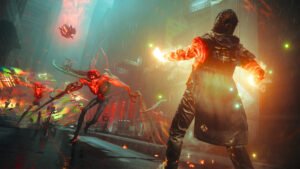
The game’s world is defined by “The Pattern,” an antagonistic force that warps environments into kaleidoscopic, recursive structures. This aesthetic approach reinforces Remedy’s commitment to integrating 3D art with level geometry. While the narrative is praised for its playability and thematic depth, the writing is described as occasionally hit-or-miss, with the reviewer noting a tendency toward “snarky” dialogue that sometimes undercuts the game’s gravitas.
Ultimately, while elements such as questing and traversal can feel occasionally mindless, the title stands out as a highly demanding, original entry in the studio’s portfolio. It succeeds by favoring design rigor over rigid adherence to the broader “Remedyverse,” delivering a mechanical experience that remains distinct from the studio’s previous, more methodical output.