News
Dungeons & Dragons: World of Warcraft Sourcebook Brings MMO Raid Bosses to the Tabletop
The worlds of Azeroth and the tabletop are finally colliding in a big way. Dungeons & Dragons: World of Warcraft is set to launch on November 17, and it is doing more than just providing lore—it is…
In this article
The worlds of Azeroth and the tabletop are finally colliding in a big way. Dungeons & Dragons: World of Warcraft is set to launch on November 17, and it is doing more than just providing lore—it is actively serving as a testing ground for how boss mechanics function in D&D 5.5 Edition. By pulling inspiration from the high-stakes, multi-phase battles of the long-running MMORPG, Wizards of the Coast is looking to make combat encounters significantly more dynamic for players.
Reimagining Raid Mechanics for Dice Rolls
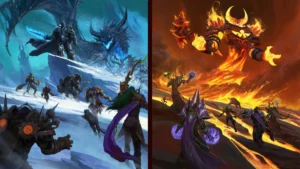
Senior game designer Joey Haeck explained that the team is leaning heavily into the ‘mythic’ creature design first introduced in 2020’s Mythic Odysseys of Theros. Rather than just having a big pool of HP, bosses in this sourcebook will feature multi-stage encounters. When a boss hits zero hit points, they won’t just die; they will refresh their health and return with an entirely new set of abilities. This system is being applied across the board, from low-level CR 4 threats up to massive, protracted endgame fights like the one against the Lich King in the included Icecrown Citadel adventure.
Translating real-time WoW mechanics into turn-based D&D was a challenge for the design team. To avoid bogged-down math or rigid timers, the designers have opted for more thematic, tabletop-friendly alternatives. For instance, instead of tracking a debuff stack count for Lady Jaina Proudmoore, DMs can freeze a player and use them as a vector for area-of-effect damage. Crucially, these debuffs can be cleared with fire damage, a flavorful twist that moves away from strictly relying on restoration spells.
New Subclasses and Future Design Trends
Beyond the boss fights, the book is introducing nine subclasses and over 40 specializations designed to mirror WoW classes. Some are simple swaps, like giving Clerics access to the Shadow Domain to emulate a Shadow Priest. However, others represent a bolder design direction. The Oath of the Ebon Blade Paladin, for example, functions as a Death Knight by swapping out core class features like Lay on Hands and Divine Smite. Principal game designer James Wyatt noted that the team hopes to continue exploring these kinds of transformative changes in future D&D releases.
Why it matters
For players, this shift represents a move toward more complex, multi-stage encounters that prioritize tactical positioning and strategic decision-making over simple “slug-fest” combat. If you enjoy the rhythm of MMO raiding, these mechanics offer a way to bring that intensity to your weekly game night without the grind.
While the sourcebook introduces these new systems, it avoids turning D&D into a video game—there is no respawning loot or instant restoration. Instead, the focus remains on narrative depth. The success of these mechanics could signal a permanent shift for the game, as the developers have indicated that these advanced boss design principles and complex subclass structures are likely to migrate from the World of Warcraft setting into the wider D&D ecosystem in future releases.