News
AMD Details AI-Powered Global Illumination Technique, Signaling Neural Rendering Push Against Nvidia
AMD's research team just published a paper on a new approach to real-time lighting that uses AI image generation instead of expensive computational methods—a potential building block for the…
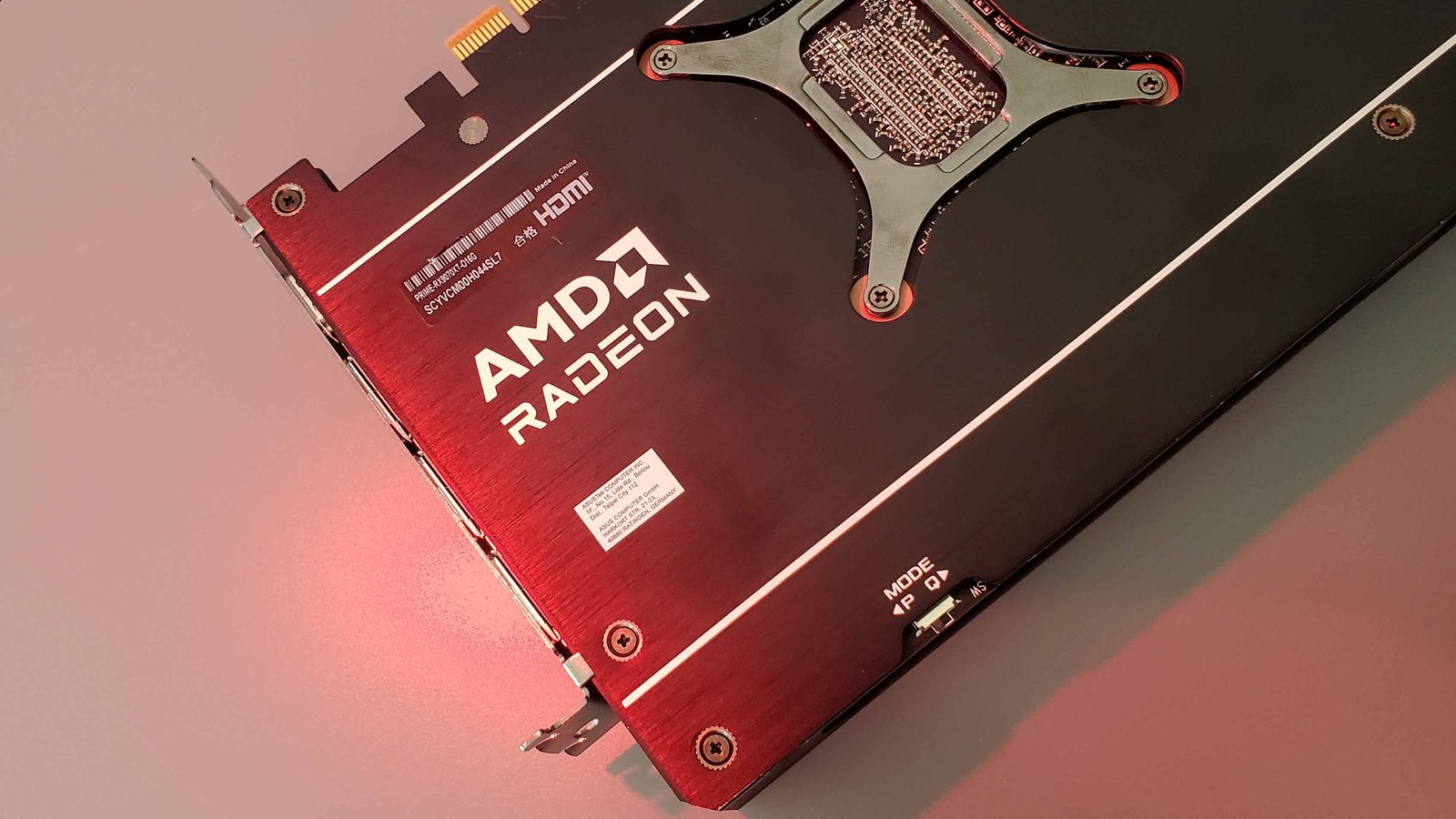
AMD’s research team just published a paper on a new approach to real-time lighting that uses AI image generation instead of expensive computational methods—a potential building block for the company’s answer to Nvidia’s DLSS 5.
The technique, detailed in a paper titled “Temporally stable generative illumination with a one-step diffusion model,” tackles global illumination—the indirect light bouncing between objects that makes rendered scenes look realistic. “Global illumination is what makes a rendered scene look real, and it is also the most expensive part of rendering,” explains SungYe Kim, one of the paper’s authors.
Instead of traditional ray tracing or path tracing, AMD’s method feeds a frame’s direct lighting (light traveling straight from a source) into a modified diffusion model (Stable Diffusion 2.1 Turbo) trained on 31,000 interior scenes rendered in Blender. The model generates realistic indirect lighting in a single denoising step—crucial for real-time performance. To keep results consistent frame-to-frame without flickering, the researchers use a temporal VAE that tracks motion vectors and maintains a history of previous outputs.
Performance and Practical Limits
The current implementation runs at 0.29 seconds per frame (roughly 3.45 FPS) at 512×512 resolution on an RTX 3090, requiring 8-9 GB of VRAM. That’s just the global illumination step, not a full frame render—still far from gaming-ready speeds, but notably faster than competing generative lighting approaches.
Part of AMD’s Broader Neural Rendering Strategy
This research aligns with AMD’s FSR Diamond announcement earlier this year, which Jack Huynh positioned as the company’s “next-gen neural rendering” suite. FSR Diamond includes ML-based upscaling, multi-frame generation, ray regeneration, and path tracing alongside neural lighting.
AMD appears to be threading carefully where Nvidia stumbled. Nvidia’s rushed DLSS 5 announcement—which emphasized AI-generated content without clarifying developer intent—sparked immediate backlash and forced the company to walk back messaging. AMD’s methodical publication of peer-reviewed research and careful framing as a tool for developers suggests the company is watching that reaction closely and adjusting its approach accordingly.