News
Resonance: A Plague Tale Legacy Transplants Medieval Franchise to Ancient Crete
Asobo Studio's _Resonance: A Plague Tale Legacy_ moves the action-adventure franchise away from its medieval roots to ancient Crete, where protagonist Sophia pursues treasure while navigating the mythological home of the Minotaur.
In this article
Asobo Studio’s Resonance: A Plague Tale Legacy moves the action-adventure franchise away from its medieval roots to ancient Crete, where protagonist Sophia pursues treasure while navigating the mythological home of the Minotaur. Released August 27 for PlayStation 5, Xbox Series S/X, and PC, the game pairs a young woman from the series’ second entry with a supernatural connection to a Minoan warrior from millennia past.
How the Story Unfolds
The game’s central mechanic revolves around resonance—synchronized actions across two timelines that mirror each other, such as a crank pushed in the bronze age still functioning in the medieval present. Sophia, equipped with a gift that compels her forward despite limited agency, is trailed by destiny as players push her through linear corridors rendered as pirate camps and Venetian streets. The narrative begins with Sophia as a young child, recently escaped from a nunnery, before jumping forward roughly a decade to her 20s, where she operates as a capable, cut-throat fighter.
Gameplay follows the third-person action-adventure template established by Tomb Raider and refined by The Last of Us: dashing, vaulting, swinging between platforms, squeezing through tight spaces, and crouching behind walls to avoid enemies. Environmental puzzles center on manipulating light with Sophia’s reflective sphere, redirecting beams through supersized lenses to progress. The campaign runs approximately 12 hours.
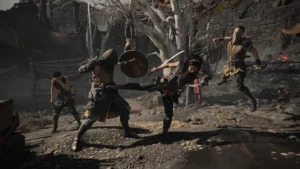
Design choices remain largely familiar without surprises from an interactive standpoint. Puzzles tend toward single solutions with limited creative freedom, rarely delivering satisfying “aha” moments. Stealth is sometimes available, but hand-to-hand combat often becomes necessary—with the most memorable fights occurring late-game, where calcified, zombie-like figures disintegrate into dust under swirling light as Sophia delivers lethal sword strikes.
Why This Matters for Action-Adventure Fans
The A Plague Tale series established itself through atmospheric storytelling and signature rat-swarm mechanics grounded in historical settings. By transplanting the franchise to Crete, Asobo opens the world to Minoan mythology and bronze-age aesthetics while preserving the light-versus-darkness thematic core that defined earlier games. The shift also allows for a heroine-led adventure in a subgenre where such stories remain valuable.
Sophia’s character—shaped by her background as the daughter of a wealthy mother and smuggler father—carries the weight of overfamiliar design choices. Her arc from escaped abuse victim to confident fighter, culminating in breaking free from predetermined destiny “in apocalyptically spectacular style,” suggests the narrative transcends pure mechanical routine.
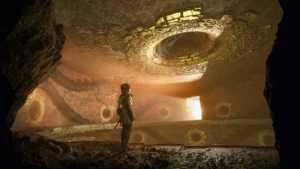
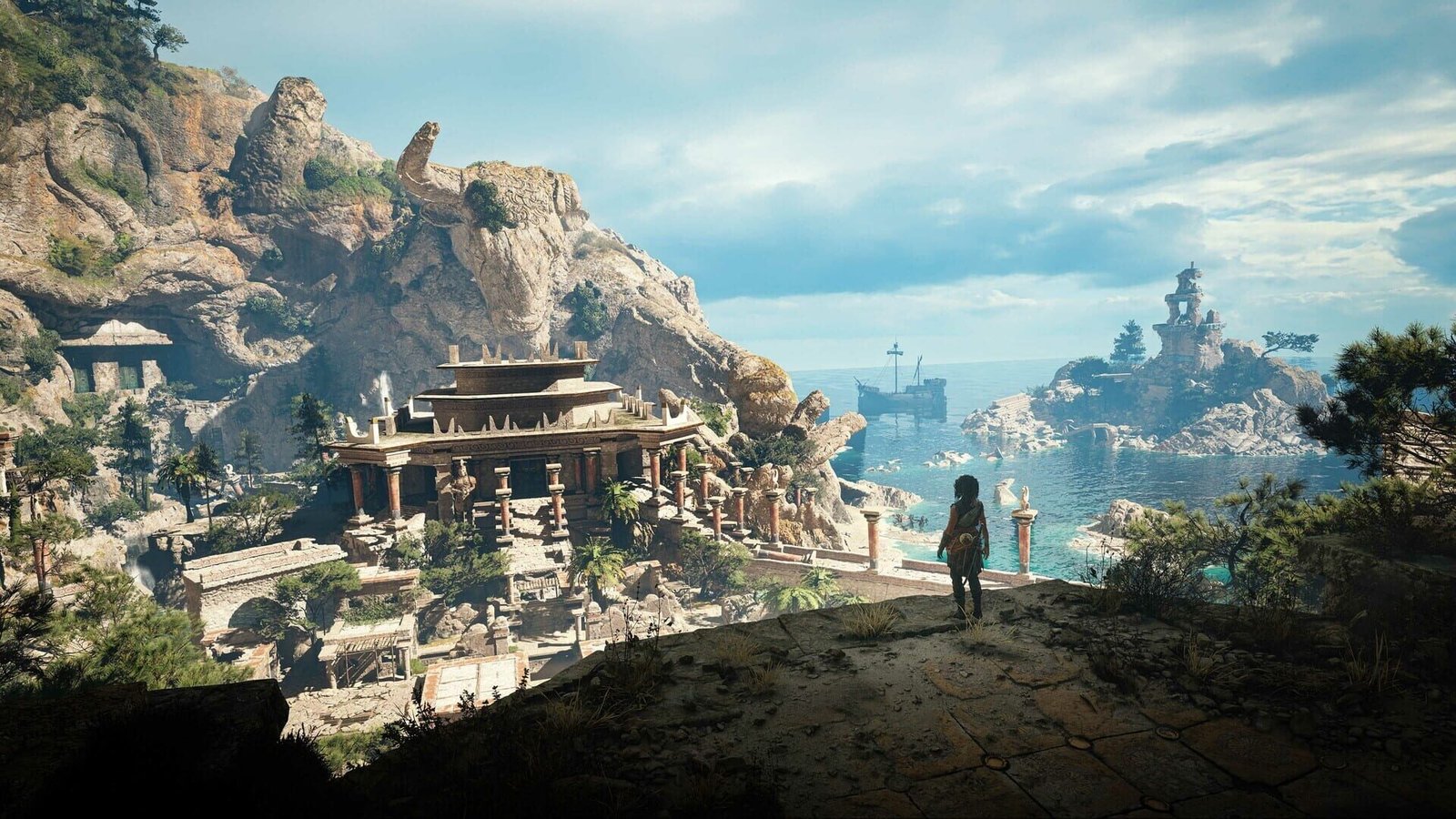
Asobo’s visual presentation distinguishes Resonance significantly. Rather than the brooding aesthetics of recent classical adaptations, Crete appears as sun-drenched holiday brochure material: soft sandstone cliffs, swallows in evening light, vivid green vegetation among crumbling statues. Minoan frescoes retain their original vibrant oranges and yellows, with the most striking moments arriving when players briefly inhabit the warrior’s perspective—crowds baying for blood, textile-draped stands, magenta flowers across mosaic floors.
What’s Next
Players familiar with the franchise’s formula will find comfort in recognizable mechanics elevated by Sophia’s compelling presence and striking visual design. Whether Resonance‘s formula and presentation sustain engagement through its 12-hour runtime appears to be the dividing line between those seeing it as a worthy addition versus a familiar retread.